

Kiswahili: The Language That Refused to Be Forgotten
Kiswahili: The Language That Refused to Be Forgotten
–by Greg Fuller, Founder of Unlocking Our Voices
Celebrating Africa’s Voice, Identity, and the Power to Remembering
An Invitation Worth Accepting
The invitation arrived in my inbox with a warmth that immediately caught my attention.
“Dear Greg, you are invited to a special celebration of World Kiswahili Language Day on Sunday, July 26, 2026, In Africantown, Philadelphia.”
Some invitations are simply calendar reminders.
Others are opportunities to witness history unfolding.
This was the latter.
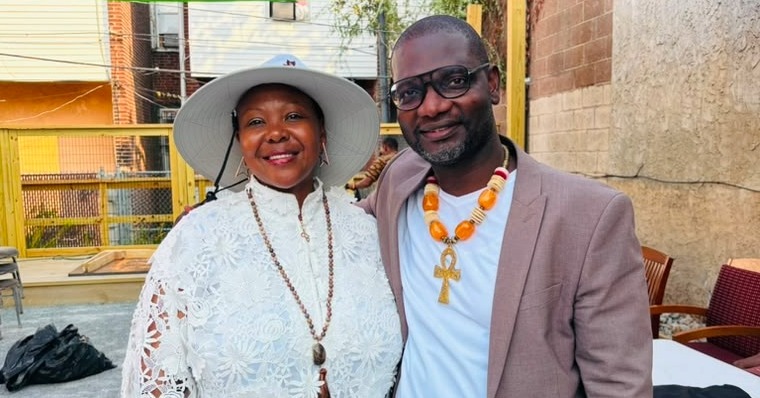
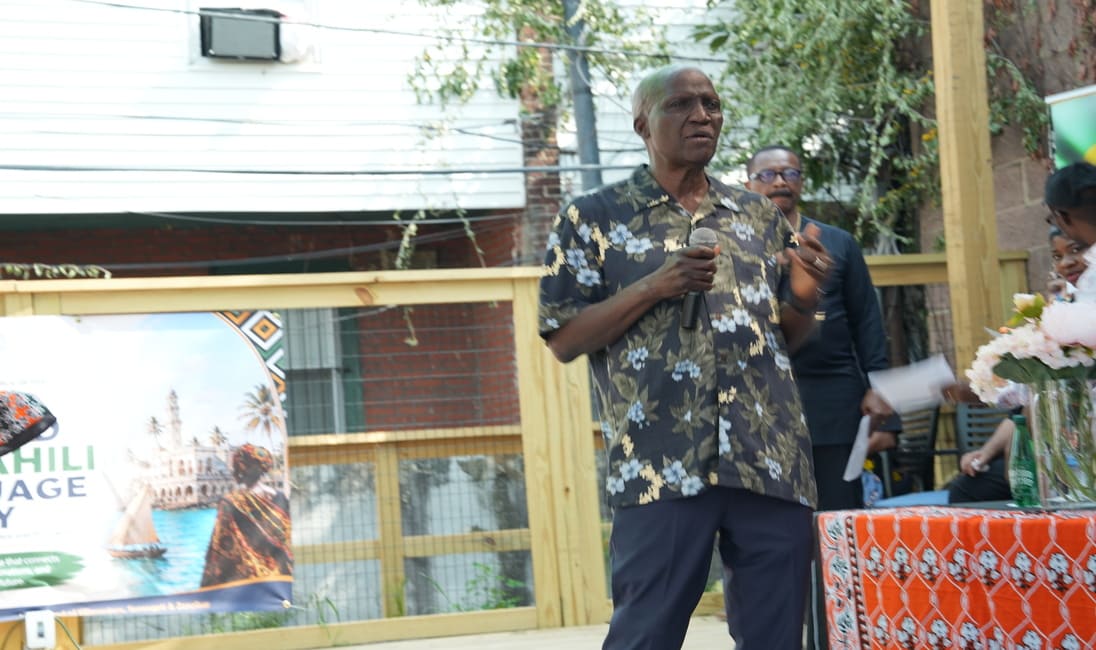
A month earlier, I had visited Africatown, with cameras slung over my shoulders, documenting the beauty of one of Philadelphia’s most vibrant communities. This time, however, I arrived differently. I wasn’t there simply as a storyteller behind the lens. I had been invited to stand alongside diplomats, educators, community leaders, and members of the African diaspora to celebrate one of Africa’s greatest gifts to the world—Kiswahili.
The summer air was warm, though far kinder on this particular Sunday evening. As guests greeted one another with handshakers, embraces, and joyful laughter, I quickly realized this gathering wasn’t merely about commemorating a language.
It was about celebrating a people.
Because every language carries the heartbeat of those who created it.
When a Language Carries a Civilization
Long before Kiswahili became recognized by the United Nations or spoken by more than fifty million people across East and Central Africa, it was born along Africa’s eastern coast through centuries of exchange among Bantu-speaking communities, merchants, travelers, scholars, and families during the 9th century. What emerged was far more than a practical way to communicate. Kiswahili became a bridge connecting cultures without erasing identity.
That alone is remarkable.
Too often, history teaches us about Africa through the lens of conquest and colonialism, as though Africans only reacted to events rather than shaped them. Kiswahili reminds us of another story altogether. It is evidence that African civilizations were creating sophisticated networks of commerce, diplomacy, literature, and cultural exchange centuries before European colonization reached much of the continent.
Africa has always been speaking.
The question is whether the world has been listening.
More Than Words
As I sampled beautifully prepared East African cuisine, another thought quietly settled into my mind.
What is language?
The dictionary offers an answer. It describes language as an organized system of communication shared by a community.
Useful?
Absolutely?
Complete?
Not even close?
Language is memory.
Language is inheritance.
Language is belonging.
Language teaches children who they are long before history books ever can.
Every proverb passed from grandparent to grandchild carries centuries of wisdom. Every greeting reflects cultural values. Every joke reveals how a community understands life. Every lullaby whispers the hopes of ancestors who dreamed their descendants would continue singing long after they themselves were gone.
Language is never just vocabulary.
It is a worldview.
The First Thing They Tried to Take
That truth becomes especially significant when we think about the African diaspora.
For millions of Africans forcibly taken across the Atlantic, the violence of slavery extended far beyond stolen labor. It reached into the soul. Families were separated. Names were replaced. Spiritual traditions were suppressed. Native languages were deliberately erased because those in power understood something many of us are only beginning to reclaim today.
If you can control someone’s language, you can begin to shape how they understand themselves.
Generations later, descendants of the African diaspora now speak English, Spanish, Portuguese, French, Dutch, and countless Creole languages. We have learned to flourish within those languages, creating breathtaking literature, unforgettable music, and cultural expressions unlike anything the world had ever seen.
Decolonizing the Mind, Reclaiming the Voice
Black people have an extraordinary ability to take whatever history hands us and transform it into beauty.
Give us hardship.
We’ll write jazz.
Give us brokenness.
We’ll create gospel.
Give us scraps.
We’ll season them until people start calling them soul food.
Our creativity has never depended upon ideal circumstances.
Still, we should never confuse adaptation with surrender.
As Kenyan author Ngũgĩ wa Thiong’o argues in Decolonising the Mind, language carries a people’s history, philosophy, values, humor, imagination, and collective consciousness. When colonial languages become the exclusive language of education, government, literature, and prestige, they also become gatekeepers of power.
His words echoed throughout my thoughts as I listened to conversations unfolding around me.
How many African children have grown up believing success requires leaving their mother tongue behind?
How many descendants of the diaspora wish they knew the language their ancestors once spoke before slavery interrupted that inheritance?
How many of us have spent years searching for identity while overlooking one of the most powerful places to begin?
Language.
What Survives Cannot Be Defeated
Of course, reclaiming African languages is not about rejecting English or any other language we speak today.
It is about refusing to believe our history began with colonization.
Our story did not begin in chains.
It began in civilizations.
It began in kingdoms.
It began in villages where mothers sang lullabies in African languages whose echoes still live inside us, even when the words themselves have been forgotten.
That realization carries tremendous hope.
Because what has been interrupted can also be restored.
Throughout history, Black communities have demonstrated an incredible ability to recover what others believed was lost forever. We rebuilt families after separation. We rebuilt neighborhoods after discrimination. We rebuilt churches after they were burned. We rebuilt schools when others refused to educate our children.
Why should language be any different?
Africa’s Linguistic treasure
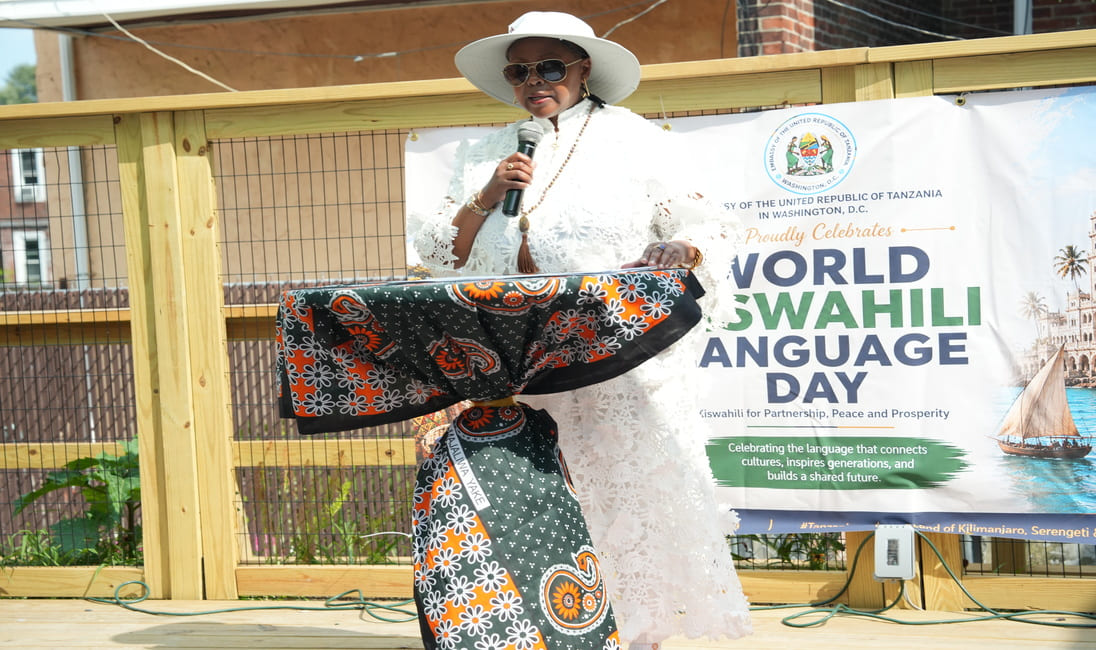
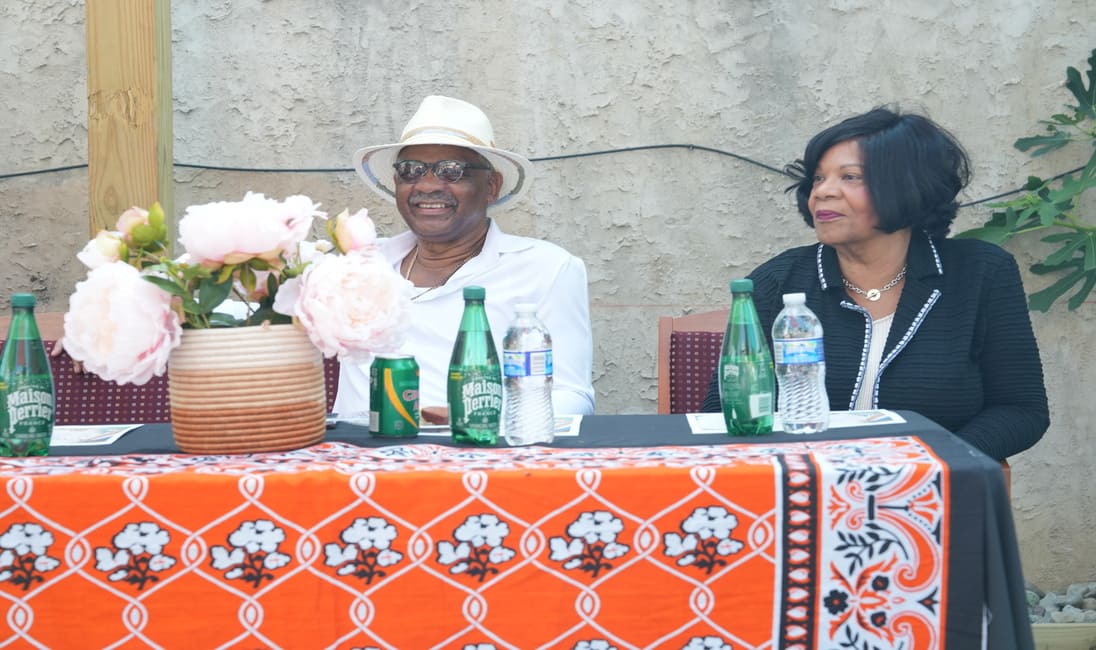
As the program continued, representatives from the City of Philadelphia joined distinguished guests from the Embassy of the United Republic of Tanzania. Each speaker celebrated Kiswahili not merely as an African language but as a global cultural treasure.
Then came remarks that quietly stayed with me for the rest of the evening.
Dr. Elsie Sai Kanza, Ambassador of the United Republic of Tanzania to the United States, described Kiswahili as “one of Africa’s greatest linguistic and cultural treasures,” emphasizing that it embodies unity, peace, dignity, solidarity, and our shared humanity.
I smiled.
Not because those words were new.
Because they were true.
Imagine that.
An African language celebrated inside a city where generations of Africans once arrived in chains, and where descendants of those same Africans now gathered freely to honor a language born thousands of miles away.
History has a beautiful sense of irony.
Colonialism tried to divide Africa.
Slavery scattered Africans across oceans.
Yet here we were.
Still gathering.
Still remembering.
Still speaking.
One language, Many Homes
One of the beautiful realities about Kiswahili is that it has never belonged to just one nation.
Although Tanzania and Kenya played pivotal roles in its growth and standardization, Kiswahili has become a language that transcends borders. Today, it is spoken throughout East and Central Africa, taught in universities around the world, recognized by the African Union, and Celebrated annually by UNESCO through World Kiswahili Language Day. It stands as the first African language to receive such international recognition–a milestone that reminds the world that Africa has never lacked intellectual traditions worthy of global celebration.
That achievement deserves more than applause.
It deserves reflection.
For centuries, the world measured civilization using European languages as its standard. Kiswahili quietly disproves those assumptions. It demonstrates Africa’s greatest contributions have always included culture, knowledge, diplomacy, and human connection.
The Joy That Needs No Translation
As I continued walking through the celebration, I noticed children laughing together while elders exchanged stories. Conversations flowed effortlessly between English and Kiswahili.
That is how culture survives.
Not inside museums.
Not only in books.
But in ordinary conversations.
Watching families interact reminded me of something every Black family seems to have in common.
There is always that one elder who insists everyone come together for a photograph.
Nobody is ready.
Somebody is still eating.
One cousin has wandered off.
Someone is fixing their headwrap.
Another is saying, “Hold on, let me get one more plate.”
Yet somehow, after twenty attempts, the picture finally gets taken.
Years later?
It becomes everyone’s favorite memory.
Black families have mastered turning beautiful chaos into lasting joy.
Perhaps that is another language we all speak fluently.
Passing the Torch
Every festival organized.
Every language class offered.
Every history lesson shared.
Every traditional meal prepared.
Every song remembered.
Every child taught to say Asante instead of only “thank you.”
These small acts become powerful declarations.
We are still here.
Our history continues.
Our story belongs to us.
The Language of Tomorrow
Dr. Elsie Sia Kanza’s words return to my mind as the evening unfolded. She described Kiswahili as a language representing unity, peace, dignity, solidarity, identity, and shared humanity.
Unity looked like strangers greeting one another as family.
Peace looked like cultures celebrating one another instead of competing.
Dignity looked like African traditions receiving the honor they always deserved.
Identity looked like children proudly hearing an African language spoken with confidence.
Shared humanity looked like people discovering that our differences are not barriers but gifts.
Kiswahili reminds us that community begins with conversation.
Conversation begins with listening.
Listening begins with respect.
Perhaps the world could use a little more of all three.
A Homecoming of the Heart
As I prepared to leave Africatown once more, I paused one final time to absorb the atmosphere around me.
The aromas of East African cuisine had drifted through the air.
The music had settled.
Surprisingly, the children were still running.
Elders were still smiling.
Conversations had not slowed.
Neither had hope.
I realized I had arrived expecting to learn about a language.
Instead, I had been reminded of something much deeper.
Every language carries an invitation.
An invitation to understand another people.
An invitation to honor another history.
An invitation to discover parts of ourselves we may have forgotten.
Our Voices Still Remember
The mission of Unlocking Our Voices has never been simply to document Black history. Our calling is to preserve living history–to amplify voices that too often go unheard and to remind the world that the African story is not confined to the past. It is unfolding every single day through our languages, our cultures, our communities, and our collective dreams. This celebration of World Kiswahili Language Day reaffirmed that our future will always be strongest when it is rooted in the wisdom of our ancestors.
As I drove home through the streets of Philadelphia, one thought refused to leave me.
Language is one of the few inheritances that grows stronger the more we share it.
Empires have risen and fallen.
Borders have been drawn and redrawn.
Generations have been displaced.
Yet the voice of Africa has never been silenced.
It has echoed through drums when words were forbidden.
It has sung through spirituals when hope seemed impossible.
It has danced through every generation that refused to surrender its joy.
And today, it speaks through Kiswahili–a language born on African soil that now reaches across continues, reminding millions of people of African descent that our story did not begin with bondage. It began with brilliance.
Our ancestors gave the world kingdoms before colonies.
Universities before plantations.
Trade routes before transatlantic.
Poetry before oppression.
They left us more than survival.
They left us a legacy.
The question before us is not whether that legacy still exists.
The question is whether we will have the courage to carry it forward.
Every time we learn an African language…
Every time we teach a child where they come from…
Every time we celebrate our cultures instead of apologizing for them…
Every time we choose unity over division…
We reclaim another piece of ourselves.
Perhaps that is the true power of Kiswahili.
It reminds us that identity is not something the world gives us.
It is something we chose to remember.
So let us remember.
Let us speak with confidence.
Let us preserve what our ancestors protected.
Let us honor those who came before us by preparing those who will come after us.
Because language can build bridges.
Stories can restore dignity.
And voices—once awakened–have the power to transform generations.
Together, we move forward.
Not simply remembering where we came from—but boldly speaking into the future we are destined to build.
Africatown: Where the African Diaspora Comes Home
Marcus Garvey and the Courage to See Ourselves: A Legacy I Carry Forward
Teresa