

Africatown: Where the African Diaspora Comes Home
Africatown: Where the African Diaspora Comes Home
–by Greg Fuller, Founder of Unlocking Our Voices
A Journey that Began With A Weather Forecast
The weather forecast gave me every reason to stay home.
Thunderstorms were expected throughout the day. Temperatures were climbing into the upper eighties, and Philadelphia’s summer humidity had already begun wrapping itself around the city like a heavy blanket. Any sensible person would have looked out the window, grabbed a cold drink, and decided there was always next year.
I packed my cameras anyway.
When I discovered that the Africatown Festival would take place on Sunday, June 28, I knew exactly where I wanted to be. Rain or shine, I was going.
Sometimes a destination calls you before you fully understand why.
That is how I felt about Africatown.
As the founder of Unlocking Our Voices, I have spent the past three years traveling, documenting, and amplifying the stories of Black communities, across the African diaspora. From South Africa to Japan, Jamaica to Colombia, each journey has taught me that our histories are wonderful, diverse, yet deeply connected.
This time, however, I did not have to cross an ocean.
The story was waiting just a few miles from my home in Southwest Philadelphia.
I thought I was simply attending a festival.
Instead, I found something much greater.
I found another reminder that the African diaspora has always known how to build home–even in places where history never intended us to thrive.
Africatown Was Here Before the Name
For many Philadelphians, Africatown feels like a recent development.
Officially, it is.
In June 2005, then-Mayor John F. Street and Councilwoman Jannie L. Blackwell took an important step toward recognizing the growing African immigrant community in Philadelphia by establishing the Mayor’s Commission on African and Caribbean Immigrant Affairs (MCACIA). The commission acknowledged the profound cultural, economic, educational, spiritual, and civic contributions that African and Caribbean immigrants had already made to Southwest Philadelphia. From that vision, Africatown emerged as a recognized cultural district–a vibrant community honoring thousands of immigrants from across Africa and the Caribbean who transformed Southwest Philadelphia into a place where heritage, entrepreneurship, and community could flourish.
But communities are not created by government proclamations.
Communities are built by people.
Long before a sign announced Africatown, African immigrants were opening restaurants, barber shops, beauty salons, churches, mosques, and small businesses. Families were purchasing homes, raising children, sending money back to relatives overseas, and creating new traditions while honoring old ones.
Neighborhoods have a way of naming themselves long before politicians catch up.
Africatown was already alive.
The city simply finally recognized what residents had known for years.
That realization reminded me of something I have witnessed throughout my travels.
Whether I am standing in Lima, Peru, walking through Johannesburg in South Africa, visiting communities in Jamaica, or now wandering the streets of Southwest Philadelphia, Black people have always found remarkable ways to create belonging.
Sometimes history remembers those communities.
Far too often, it does not.
Philadelphia’s Black Story Didn’t Begin in 2005
Standing in Africatown also pulled my thoughts further back into Philadelphia’s remarkable past.
Long before the city became known for cheesesteaks, the Liberty Bell, and Independence Hall, Philadelphia was home to one of the largest and most influential free Black populations in the United States.
The irony has never been lost on me.
Philadelphia proudly calls itself the birthplace of American freedom.
Yet for generations, freedom was unevenly distributed.
While delegates debated liberty inside Independence Hall in 1776 and later drafted the United States Constitution, hundreds of thousands of Black people continued living under slavery or navigating a society determined to deny their humanity.
Freedom, it seemed, depended on who was doing the defining.
Still, Black Philadelphians refused to wait for permission to build their own future.
Richard Allen and Absalom Jones founded the Free African Society in 1787, one of the nation’s first Black mutual aid organizations. At a time when mainstream institutions often excluded African Americans, the Society provided financial assistance, education, spiritual guidance, and community support.
Its mission was simple.
If society refused to care for Black people, Black people would care for one another. That spirit eventually gave birth to Mother Bethel African Methodist Episcopal Church, founded by Richard Allen in 1794. Mother Bethel became more than a church.
It became a refuge.
A meeting place.
A school.
A center of abolitionist organizing.
A sanctuary where Black dignity could flourish despite the hostility surrounding it.
Our ancestors understood something profound.
Institutions matter.
When systems excluded us, we built our own.
Churches.
Schools.
Businesses.
Fraternal organizations.
Mutual aid societies.
Newspapers.
Political movements.
Entire neighborhoods.
Again and again, Black communities transformed rejection into resilience.
The Cost of Progress
That progress, however, came at a tremendous cost. As Philadelphia’s free Black population expanded during the nineteenth century, so did white resentment. Economic success often invited violence.
The Flying Horse Riot of 1834.
The Pennsylvania Hall Riot of 1838.
The Lombard Street Riot of 1842.
Each represented more than isolated outbreaks of hatred. They were deliberate attempts to intimidate Black communities whose very existence challenged America’s racial hierarchy.
Homes were attacked.
Businesses destroyed.
Churches vandalized.
Families terrorized.
Yet despite every effort to erase our progress, Black Philadelphians continued moving forward.
That resilience is one of the defining characteristics of the African diaspora.
Our history is not simply one of survival.
It is one of continual reinvention.
We have repeatedly taken broken circumstances and built thriving communities.
We have carried languages across oceans.
Recipes across generations.
Songs across continents.
Faith across centuries.
Even joy itself has become an act of resistance.
That may be one of our greatest superpowers.
Somehow, after enduring unimaginable hardship, somebody in every Black family still says, “Turn the music up.”
And before long, somebody’s auntie has started dancing.
If you’ve ever attended a Black family gathering, you already know.
The program starts thirty minutes behind schedule because everyone keeps stopping to hug relatives they haven’t seen in six months.
And somehow, despite all the delays, everything works out exactly as it’s supposed to.
There is a beautiful order inside what outsiders sometimes mistake for chaos.
Black communities have always known how to make room for one another.
That same spirit would greet me at Africatown.
Although I had come hoping to make connections, I had no idea that, before the day ended, I would feel less like a visitor and more like family.
The Sound of the Diaspora
By the time I arrived, the weather had made good on part of its promise.
Sweat found its way down my forehead almost immediately. Every photographer knows that cameras and excessive heat aren’t exactly best friends, but I had learned long ago that some stories are worth a little discomfort.
Besides, Black folks have a special relationship with weather.
We’ll complain about the heat all afternoon, fan ourselves with the nearest church program, tell everyone, “It’s too hot out here,” and then stay another four hours because the music is too good to leave.
Africatown was no different.
Before I even reached the entrance, I could hear the drums.
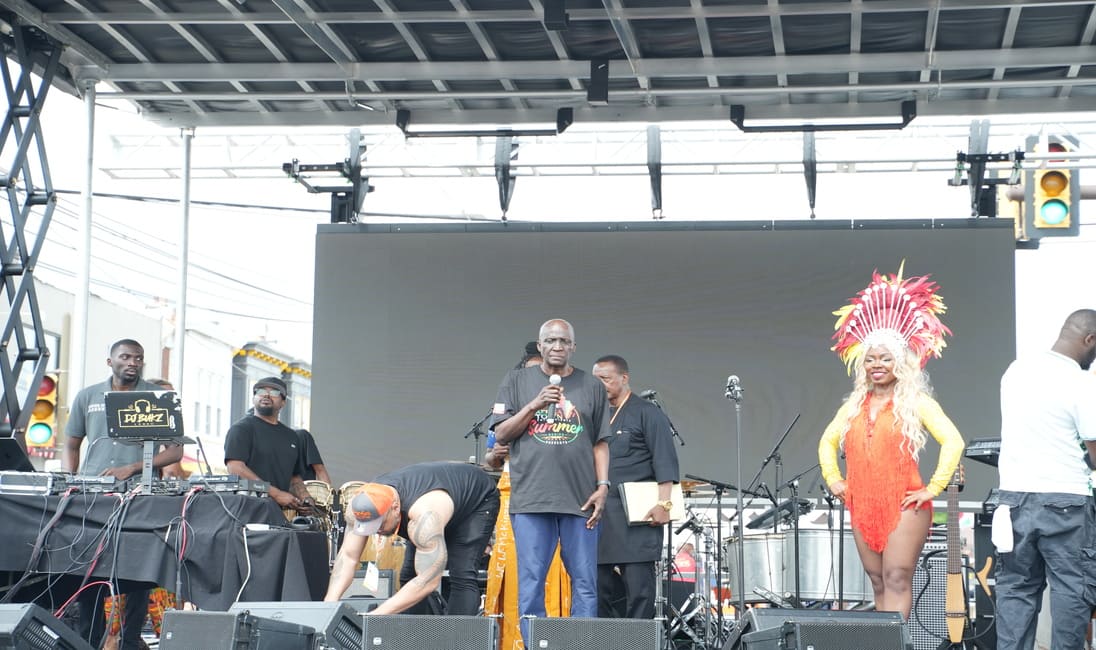
The steady rhythm seemed to rise from the pavement itself, pulling people toward the festival like an invisible heartbeat. Layered over the percussion came laughter, conversations in accents from across the African world, children running, playing, and music that effortlessly crossed oceans. One moment I heard Afrobeat. A few steps later came reggae. Then gospel drifted across the crowd, followed by rhythms from Brazil and traditional West Africa melodies.
No one seemed concerned about where one culture ended and another began.
It all belonged.
That, perhaps, is one of the greatest gifts of the African diaspora.
We carry different passports, speak different languages, and inherit different colonial histories, yet somehow the rhythm always recognizes us before we recognize one another.
A Community Without Strangers
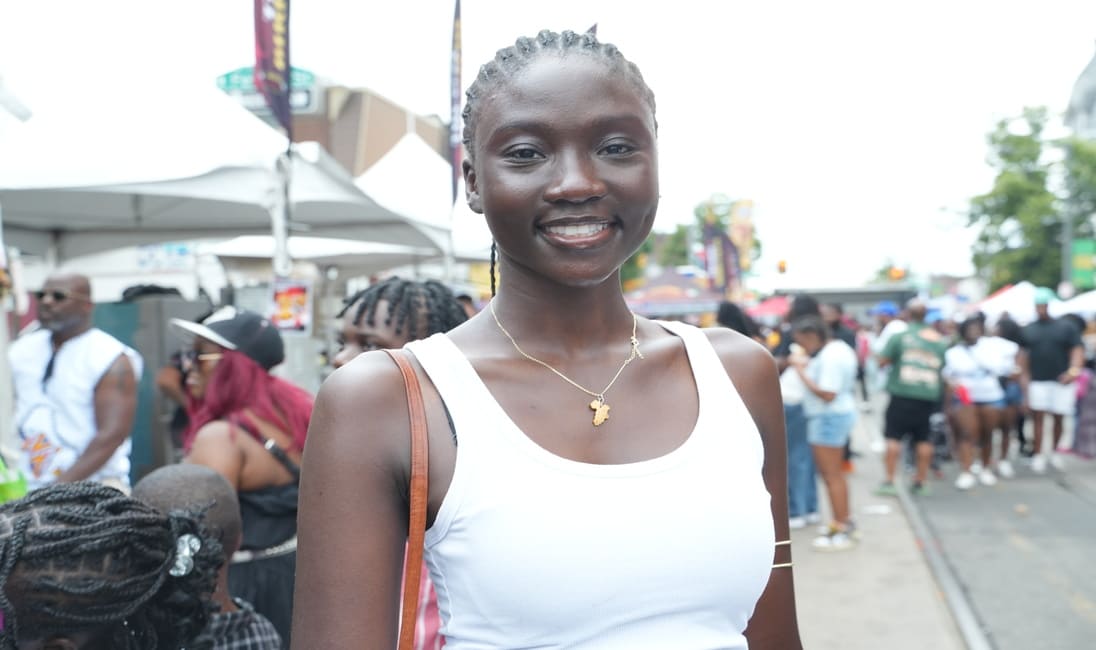
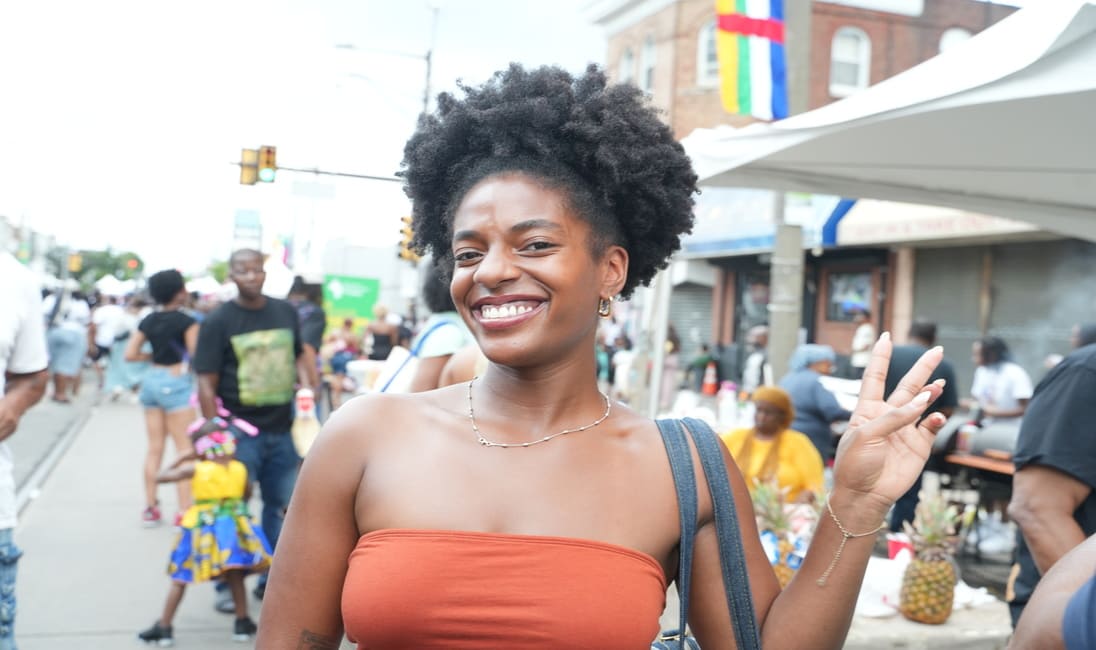
As I walked deeper into the festival, rows of colorful vendor tents stretched before me.
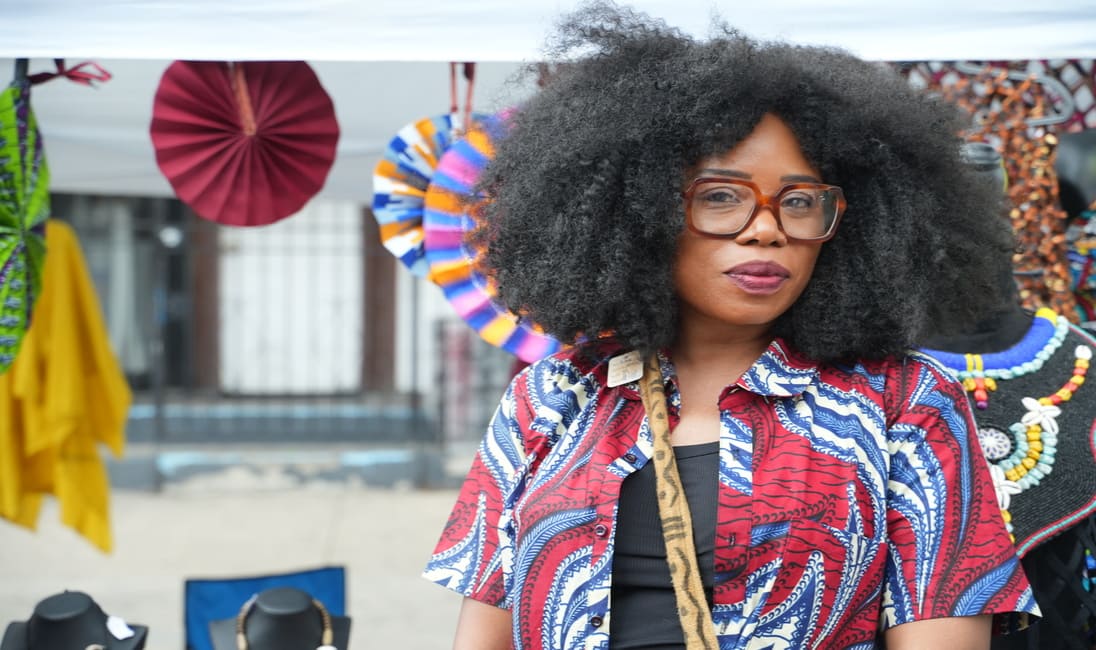
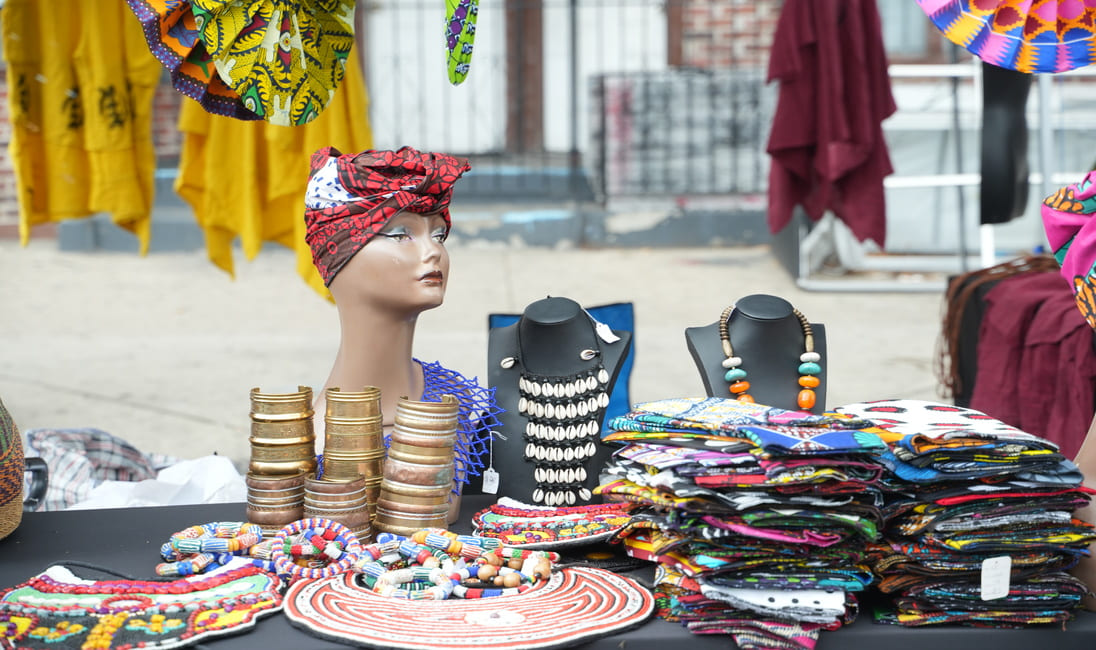
Some displayed handcrafted jewelry made from Ghanaian beads. Others featured vibrant kente cloth, books celebrating Black history, shea butter products, artwork, handcrafted drums, and clothing representing countries throughout Africa and the Caribbean.
The aromas competed for attention.
Jollo rice.
Jerk chicken.
Grilled fish.
Fried plantains.
Rice and peas.
If there is one thing Black people across the diaspora have mastered, it is turning food into an international language.
I laughed to myself thinking that if world leaders spent less time in conference rooms and more time sharing plates at festivals like this, we might solve a few more global problems. Food has always been diplomacy in Black communities.
Every recipe tells a story.
Every seasoning carries memory.
Every meal reminds us that culture survives not only through history but around dinner tables.
One God! One Aim! One Destiny!
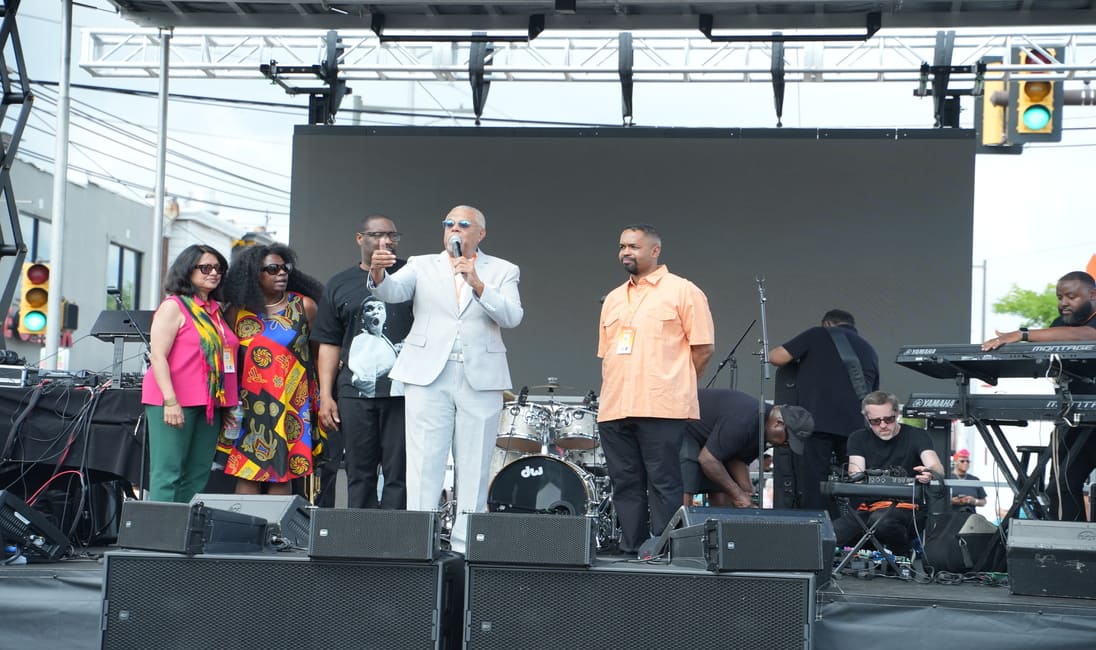
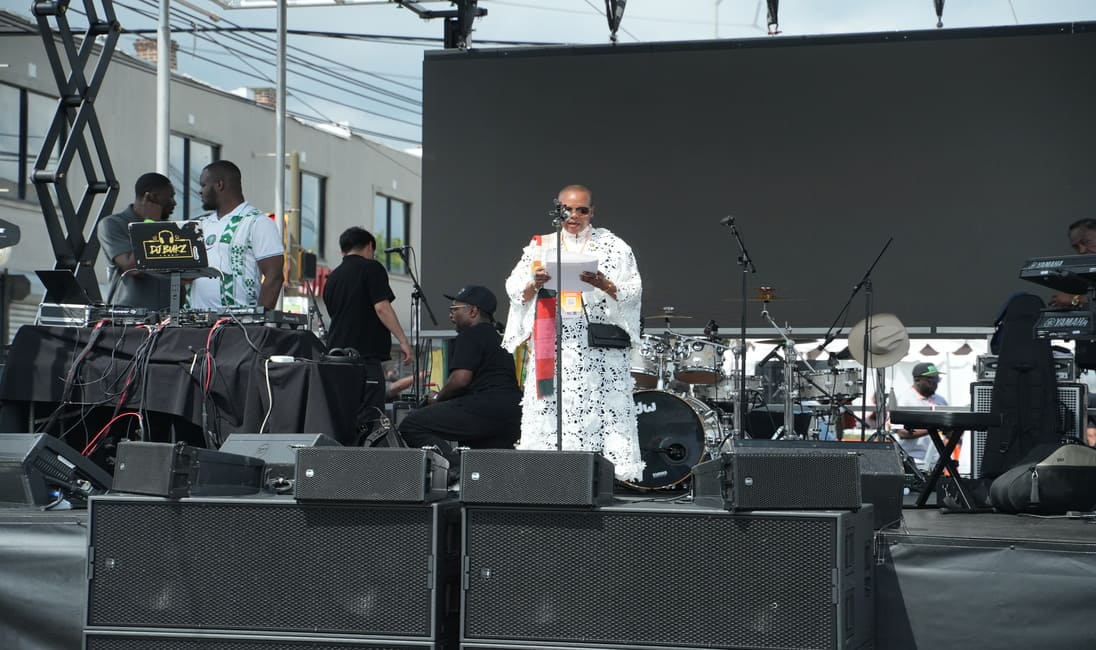
One of the most powerful moments of the afternoon came when Voffee Jabateh, Executive Director of the African Cultural Alliance of North America, addressed the audience.
His words were simple.
Yet they carried enormous weight.
“We are one people whether you are Black American, Nigerian, coming from the Caribbean, or Ghana.”
As I listened, my thoughts immediately returned to why I founded Unlocking Our Voices.
Those few sentences captured everything this organization strives to accomplish.
For centuries, colonialism and slavery worked to divide people of African descent.
Borders were drawn.
Languages imposed.
National identities reshaped.
Families scattered across continents.
Yet beneath those differences remains something no empire has ever been able to erase.
Connection.
As Speaker Jabateh continued, another familiar phrase echoed throughout the festival.
“One God! One Aim! One Destiny!”
The crowd responded with enthusiasm.
Some shouted the words.
Others nodded knowingly.
I couldn’t help but smile.
Many in the audience may not have realized those words became the famous motto of the Right Excellent Marcus Mosiah Garvey and the Universal Negro Improvement Association.
As a Jamaican, hearing Garvey’s vision echoed in Southwest Philadelphia stirred something deep inside of me.
Garvey dreamed of a globally connected African people long before social media, before international flights became commonplace, before globalization became a buzzword. Standing there, surrounded by people whose families trace their roots to dozens of countries, his words no longer sounded like history.
They sounded like prophecy fulfilled.
Black Joy Needs No Translation
There was something else happening that afternoon.
Something impossible to measure.
Black joy! Not the kind performed for cameras. Not the temporary excitement that disappears once the music stops. This joy had roots. It lived in conversations between grandparents and grandchildren.
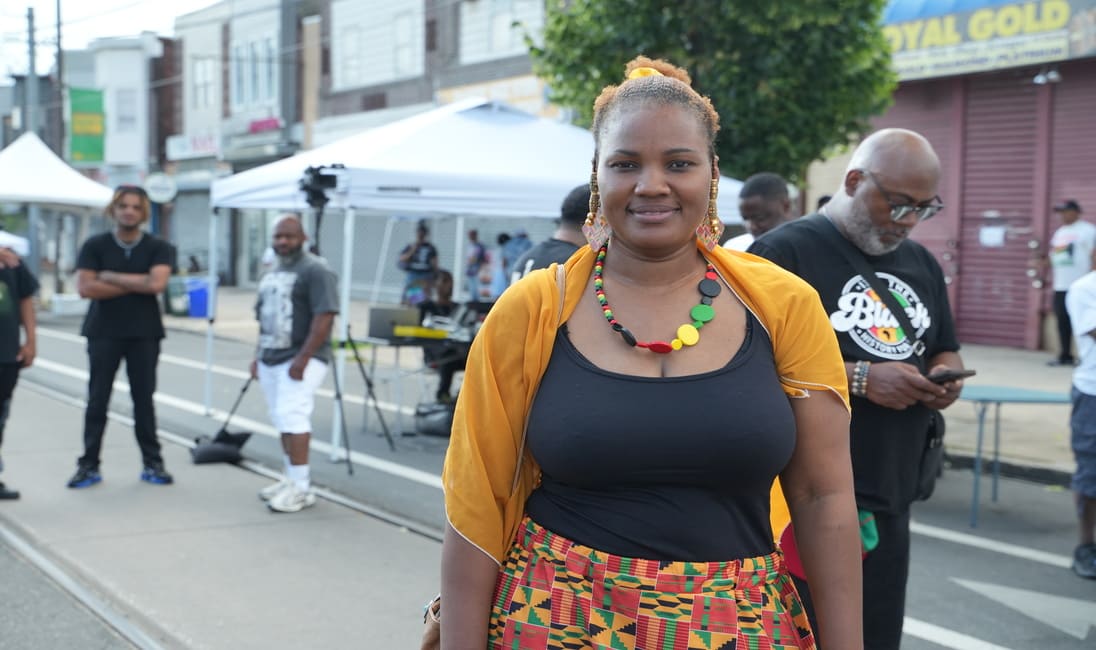
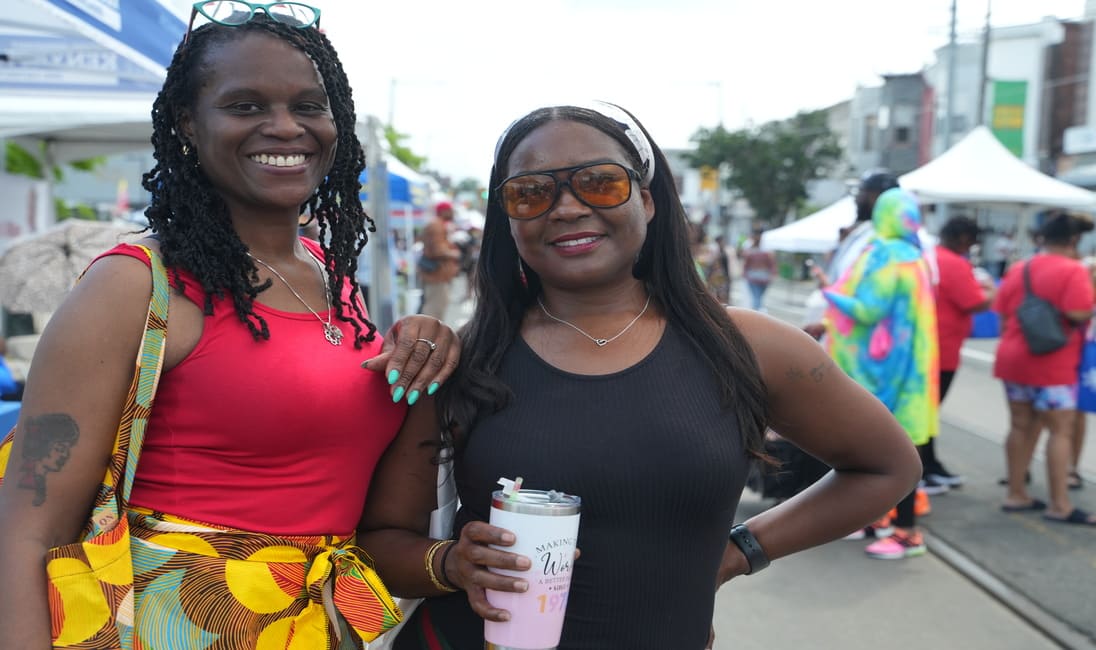
It danced beside the drum circle. It laughed beneath colorful umbrellas. It smiled from every family photograph being taken. As I looked around, I noticed the incredible diversity of our people. The African continent had come to Southwest Philadelphia.
Black Americans.
Ghanaians.
Nigerians.
Liberians.
Sierra Leoneans.
Ethiopians.
Kenyans.
Jamaicans.
Barbadians.
Trinidadians.
Brazilians.
Haitians.
People whose histories unfolded in different parts of the world but whose presence together created something beautiful.
I found myself quietly admiring the richness of the African diaspora.
Different shades of melanin.
Different facial features.
Different hairstyles.
Different languages.
Different fashions.
Yet all unmistakably connected.
It reminded me that Blackness has never been one experience.
It has always been many experiences sharing one ancestral story.
Finding Home in Familiar Faces
At one point, I paused simply to observe.
Sometimes photographers or cinematographers become so focused on capturing moments that they forget to experience them.
I lowered my camera. The elders sat proudly in front of the stage and well dressed in magnificent traditional attire representing cultures from across Africa.
Some wore beautifully embroidered dashikis.
Others wore elegant gele headwraps that seemed almost architectural in their craftsmanship.
Every outfit carried history.
Every fabric told a story.
Nearby, young people danced with a confidence that honored tradition while embracing modern identity.
This was not a museum preserving the past.
This was culture alive.
Breathing.
Growing.
Evolving.
I realized then that I was no longer thinking about the forecast.
The threat of thunderstorms had disappeared from my mind.
So had my original goal of “making connections”
The connections had already been made.
Without explanation.
I had arrived expecting to document Africatown.
Instead, Africatown was quietly reminding me that wherever Black people intentionally gather to celebrate one another, home has a way of finding us.
And that realization stayed with me long after the drums faded into the Philadelphia evening.
The African Diaspora Is Still Writing Its Story
One of the greatest misunderstandings about the African diaspora is the assumption that our history belongs only in museums or textbooks.
It does not.
Our history is still unfolding.
It unfolds every time an immigrant family opens a small business and creates opportunities for the next generation.
It unfolds when elders pass down stories that never found their way into history books.
It unfolds when young artists blend African traditions with contemporary music, fashion, and visual art.
It unfolds when neighbors from Liberia, Jamaica, Nigeria, Haiti, Ghana, Brazil, and Black America gather around the same table and discover they have far more in common than they ever imagined.
History is not frozen.
It breathes.
Africatown reminded me that preserving Black history is not only about remembering where we came from.
It is also about recognizing what we are building today. Future generations will one day look back on these festivals, organizations, businesses, and neighborhoods as part of their own history.
The question is whether we will document it before someone else tells the story for us.
Too often, Black communities have been written about instead of listened to. Our stories have been interpreted through someone else’s perspective rather than our own voices.
That is precisely why Unlocking Our Voices exists.
Not to speak for our communities.
But to create space where our communities can speak for themselves.
More Than a Festival
As I packed away my cameras and prepared to leave, I looked back one last time.
The drums were still playing.
Children were still dancing.
The aroma of food still floated through the summer air.
The elders were still smiling as they watched younger generations carry traditions forward in their own unique ways.
I realized then that Africatown is not defined by a single day each summer.
It is not simply a neighborhood.
It is not merely a festival.
It is an idea.
An idea that people of African descent, regardless of where history scattered us, can still find common ground.
An idea that culture survives because ordinary people choose to protect it.
An idea that community is something we build together, one conversation at a time.
Long after the tents come down and the music fades, those ideas remain.
The Work Continues
As I drove home that evening, I thought about the mission that has guided Unlocking Our Voices since its beginning.
Our purpose has never been simply to document Black history.
Our purpose is to help preserve living history.
To amplify voices that deserve to be heard.
To celebrate communities that too often exist outside the headlines.
To remind ourselves–and the world–that the African diaspora is not defined solely by oppression.
We are innovators.
Educators.
Artists.
Faith leader.
Parents.
Dreamers.
Builders.
Storytellers.
Our ancestors crossed unimaginable waters carrying little more than hope and determination. Somehow, despite every attempt to erase our identities, they left us languages, recipes, music, faith, traditions, and an unbreakable belief that tomorrow could be better than yesterday.
That inheritance is our responsibility.
Africatown reminded me that, although the African diaspora stretches across continents and centuries, our voices still have the power to find one another.
As long as we continue sharing those voices, honoring our ancestors, and celebrating the richness of our cultures, the story of the African diaspora will never be one of disappearance.
It will always be one of perseverance.
And that story is far from finished.
If this story moved you, we invite you to continue the journey with us. Subscribe to one of our patrons on our website at www.unlockingourvoices.com/plan explore more stories from across the African diaspora, follow us on social media, and share this article with someone who believes in the power of our collective story.
Because every voice matters.
Every story deserves to be remembered.
And together, we are ensuring that the legacy of the African diaspora continues to inspire generations to come.
Japan rebuilt from ruins into a world power. So why is Africa still denied the same chance?
Kiswahili: The Language That Refused to Be Forgotten
Cina